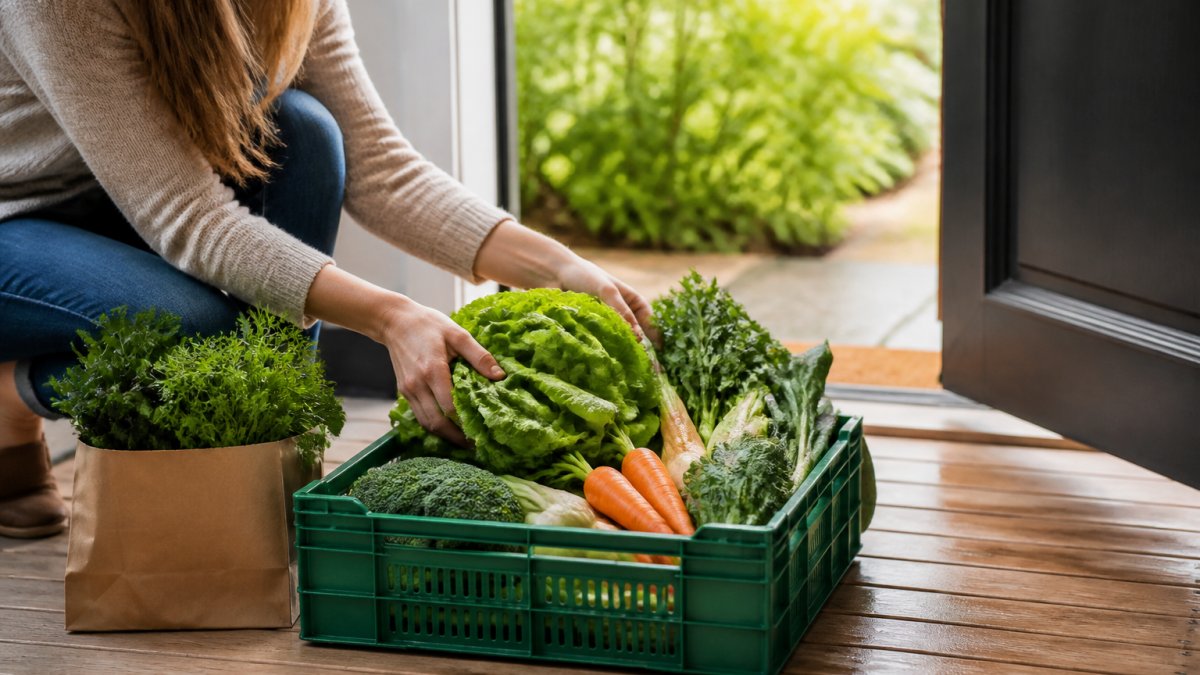
 blog
Best Organic Produce Delivery for Families: 2026 Guide
Last Updated: November 4, 2026
Quick Summary
The best organic produce delivery for families matches box size to your weekly servings, keeps all-in costs honest, and comes from a grower you can verify. Choose a box that covers your household without overshooting, since a box that overshoots by 30% becomes compost. Confirm delivery to your address and check certification before subscribing.
- A family of four eating vegetables at most dinners needs roughly 20 to 25 vegetable servings a week.
- Compare the all-in weekly cost, not the headline box price, then divide by servings.
- Ask who certifies the farm and whether the service can show you the certificate.
- Confirm your address is on a delivery route before comparing prices.
- Order the smaller size for two weeks, track what you use, then adjust.
Table of Contents
- What the Best Produce Delivery Service Gets Right for Families
- Box Sizes, Serving Counts, and Household Needs
- Pricing, Delivery Fees, and Minimum Orders
- Fresh Fruit and Vegetables Delivered to Your Door: What to Expect
- Organic Certification and Sourcing You Can Verify
- Finding Organic Produce Delivery Near Me: Delivery Areas and Scheduling
- Customization, Allergies, and Picky Eaters
- Total Cost Per Serving: A Realistic Family Budget
- Frequently Asked Questions
What the Best Produce Delivery Service Gets Right for Families
Roughly 30% of organic buyers say that between a quarter and half of all the produce they purchase is organic, according to The Packer's Fresh Trends 2026 report. For a family, that is a real weekly budget, which is why the best organic produce delivery for families has to earn its place on three things: the right box size, honest pricing, and produce that actually gets eaten. At Papadaves, we grow what we sell on our own organic farm and deliver it straight to your door, so we have a clear view of what makes a box work for a household and what just looks good in a photo.
Organic produce delivery is a subscription or one-time service that brings certified organic fruits and vegetables from a farm or farm network to a customer's home on a set schedule. The best versions solve the family problem behind the purchase: too little time, too much waste, and no way to check whether "organic" means anything.
Below, we break down box sizes, fees, freshness, certification, delivery areas, and real cost per serving, so you can judge a service in ten minutes instead of ten weeks.
Box Sizes, Serving Counts, and Household Needs
Start with servings, not pounds. A family of four eating vegetables at most dinners needs roughly 20 to 25 vegetable servings a week, plus fruit for breakfasts and lunches. Small boxes suit couples and singles; medium boxes usually cover two to three people; large boxes fit four or more. If a household includes teenagers, size up.
The practical test: count how many dinners you cook at home in a week, multiply by the number of people eating vegetables, and compare that to the servings a box advertises. A box that overshoots by 30% becomes compost.
Pricing, Delivery Fees, and Minimum Orders
Compare the all-in weekly cost, not the headline box price. Add the delivery fee, subtract any member discount, and divide by servings. A cheap box with a $10 delivery fee and two skipped items often costs more per plate than a slightly pricier box with delivery included.
Watch out: a low starting price often reflects the smallest box, so check the size that matches your household before judging value. For shipping details, fees, and returns, our frequently asked questions page covers the practical side.
| Household | Typical box size | What to check before ordering |
|---|---|---|
| Single or couple | Small | Delivery fee and minimum order |
| Family of 3-4 | Medium to large | Servings per box, substitution policy |
| Family of 5+ or teens | Large or two boxes | Delivery frequency, add-on groceries |
Fresh Fruit and Vegetables Delivered to Your Door: What to Expect
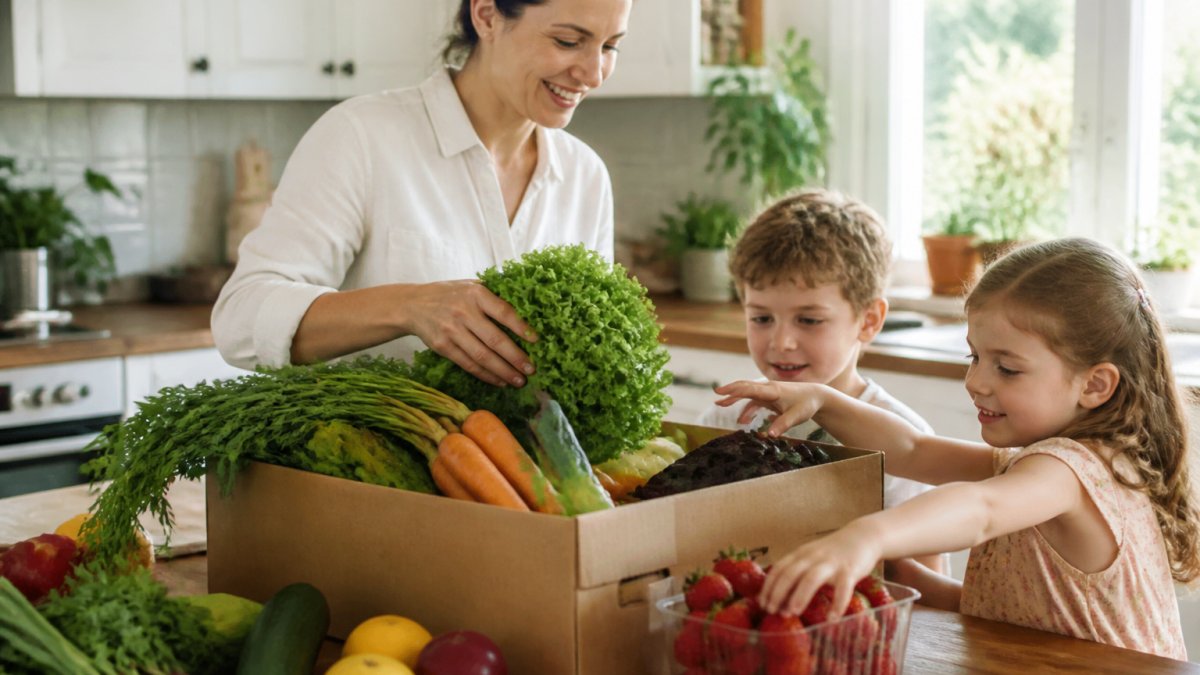
A farm box should arrive looking like it was picked this week, because it usually was. Expect seasonal variety rather than the same twelve items year-round, and some dirt on root vegetables, a sign of short travel, not poor quality.
Freshness, Storage, and Cutting Food Waste
Freshness is a logistics question. Produce harvested to order and delivered within days holds up far longer than produce that has spent a week in a distribution chain. Store leafy greens dry and wrapped, keep roots cool and dark, and wash berries only before eating.
The bigger waste risk is ordering more than you cook. A common mistake is sizing up "for value" and tossing half the box. Order the smaller size for two weeks, track what you use, then adjust.
Organic Certification and Sourcing You Can Verify
Ask one question: who certifies the farm, and can the service show you the certificate? In the United States, organic claims are governed by the USDA National Organic Program. A serious service answers without hesitation.
Sourcing transparency matters too. Some services grow part of the box and bring in the rest from partner farms, which is fine as long as they say so. At Papadaves, products come from our own organic farm.
Worth knowing: USDA Economic Research Service data shows total organic acreage has fallen by nearly 2 million acres since 2021, which makes knowing your grower more useful, not less.
Finding Organic Produce Delivery Near Me: Delivery Areas and Scheduling
Availability decides everything. Many services publish a delivery-area map or ZIP code check, and many run fixed routes on set days. Before comparing prices, confirm your address is on a route and which day it falls on.
Scheduling flexibility is the other half. Look for the ability to skip a delivery, pause a subscription, or shift your delivery day when work and school schedules change. If you are unsure whether your area is covered, our contact page is the fastest way to confirm availability.
Customization, Allergies, and Picky Eaters
Customization is where family services separate.
Ask two things before subscribing: can I substitute items, and can I set permanent exclusions? Confirm the answers with the service directly, since options vary by plan.
How substitution works. Ask the service how its customization window works, how many swaps are free, and what happens if a swap item is out of stock, then check the confirmation email before delivery.
Permanent exclusions versus one-off swaps. These are different controls and families may need both. A permanent exclusion list tells the service never to send a specific item, such as one a family member is allergic to.
Allergies and dietary needs. For a true allergy, read the service's allergen statement rather than relying on the exclusion list.
Picky eaters. The practical lever is familiarity. Keep at least one known item in every box and introduce one new item per week, so a child's experience with new produce builds gradually.
Add-on groceries. Check whether a service offers pantry add-ons, and if so, the minimum, whether they ship in the same delivery, and whether they count toward any free-delivery threshold.
Watch out: some services limit swaps or charge per swap, which erodes the value for a family that needs to exclude several items every week.
Total Cost Per Serving: A Realistic Family Budget
Work out cost per serving, not cost per box. Divide the weekly total, including delivery, by the number of servings you will genuinely cook.
Then add the hidden savings: one fewer store trip, fewer impulse purchases, and less food in the bin. A box that costs slightly more but gets eaten entirely is cheaper than a bargain box that half-spoils.
Build the all-in weekly number. Start with the box price for the size that matches your household, not the smallest box.
Account for skipped and swapped items. A swap to a more expensive item raises the box cost, and a skipped delivery week lowers your monthly average.
Compare against the supermarket correctly. Price the same organic items at your usual store for one week, including the trip and any impulse purchases, and compare that to the box cost per serving.
Budget by household size. Estimate your weekly serving need, multiply it by your cost per serving to get a realistic weekly budget, then compare that number to what you currently spend on organic produce.
Where the hidden costs sit. Delivery fees, add-on minimums, packaging, and per-swap charges can push a box above budget.
Watch out: comparing a small box price to a supermarket receipt for a family of four can understate the real cost, because a small box may not cover the whole week.
Frequently Asked Questions
How do I choose an organic produce delivery service for my family?
Start with the practical questions: how many servings each box size covers, whether you can customize or swap items, and what the delivery window looks like for your schedule. Check that organic certification comes from a USDA-accredited certifier rather than a marketing label, and confirm you can skip or pause a delivery without penalty. Compare the total cost per serving, not just the box price, and ask how the service handles a bad item. A short trial box is the fastest way to test freshness and whether your kids actually eat what arrives.
Are organic produce boxes worth it for families?
For many families, the value comes down to time and consistency. A produce box replaces part of a weekly grocery trip and keeps fresh fruit and vegetables in the house, which matters if busy schedules push you toward takeout. A subscription can match habits you already have, so consider how much of your produce is already organic. Weigh the per-serving cost against your current spending before committing to a recurring plan.
Can you customize or skip an organic produce delivery?
Most services now build in flexibility, but the details vary. Look for item substitutions, the ability to skip a single delivery, and the option to pause a subscription during vacations or tight budget weeks. Some providers offer one-time box purchases instead of a recurring plan. Confirm the cutoff time for changes with the service you choose.
How much produce should a family order each week?
A practical starting point is to estimate your household's daily servings of fruit and vegetables, then adjust after two weeks of real use. A family of four eating mostly home-cooked meals often needs a medium to large box, while smaller households do better with a small box plus grocery add-ons. Track what you throw away in the first month. If spoilage climbs, drop a box size or switch to biweekly delivery rather than canceling, since food waste is the quickest way to erase the value of organic produce delivery.
Families deserve organic produce they can trace to a real farm and a delivery schedule that bends around soccer practice and late meetings. Papadaves grows on our own organic farm and delivers farm-to-door, with products sourced directly from us rather than an anonymous supply chain. Get started with Papadaves and build a weekly box that fits your table, your budget, and your calendar.
