 How-to
7 Ways to Reduce Food Waste at Home
Last Updated: November 15, 2026
Quick Summary
To reduce food waste at home, plan meals from what you already own, shop with a list built from those meals, and store food in the right zones. Keep the fridge at 40°F or below, refrigerate leftovers within 2 hours, and use them within 3 to 4 days.
- The average U.S. household throws out one in every four bags of groceries, worth $1,866 per year.
- Keep the refrigerator at 40°F or below and the freezer at 0°F.
- Store raw meat and poultry on the bottom shelf and cook or freeze within 1 to 2 days.
- Date labels are mostly about quality, not safety, and most are set by the maker.
- Compost fruit and vegetable scraps, coffee grounds, and eggshells, but skip meat, dairy, and oily foods.
Table of Contents
- Start With Meal Planning to Reduce Food Waste
- Learn How to Store Food to Prevent Waste
- How to Use Leftovers Before They Go Bad
- Try Food Scrap Composting at Home
- Frequently Asked Questions
Start With Meal Planning to Reduce Food Waste
The average U.S. household throws out one in every four bags of groceries, according to Rutgers Cooperative Extension's food waste guidance, $1,866 per year. A simpler fix is to plan first and shop second.
Meal planning to reduce food waste starts with a weekly menu built from what you already own, then a shopping list around it.
Here is how we would do it:
- Check the fridge, freezer, and pantry before you shop, as the EPA recommends
- Pick three or four dinners for the week
- Build your list from those meals only
- Buy only what you need, and skip impulse purchases
One small habit helps most: cook the oldest food first. Use a first-in, first-out system on every shelf.
Learn How to Store Food to Prevent Waste
Proper food storage is the fastest way to extend freshness. Most spoilage comes down to where and how you keep food, not how fresh it was at purchase. Match each category to the right zone and a realistic shelf life.
Keep the refrigerator at 40°F or below and the freezer at 0°F, as the FDA advises in its tips to reduce food waste. A refrigerator thermometer removes the guesswork.
Treat these windows as typical ranges, not guarantees, and check the FoodKeeper storage times for specific items.
- Leafy greens and herbs: wash only before use, wrap in a dry towel, keep in the crisper drawer; most last 3 to 7 days. Sturdy herbs keep longer in a glass of water.
- Berries: keep dry and unwashed in a breathable container; roughly 3 to 7 days. Wash right before eating.
- Root vegetables: store cool and dark, separate from onions; potatoes, carrots, and beets hold 2 to 4 weeks.
- Stone fruit and avocados: ripen on the counter, then refrigerate.
- Dairy: keep milk and yogurt on an interior shelf, not the door; use within the date once opened.
- Raw meat and poultry: bottom shelf in a sealed container; cook or freeze within 1 to 2 days of purchase.
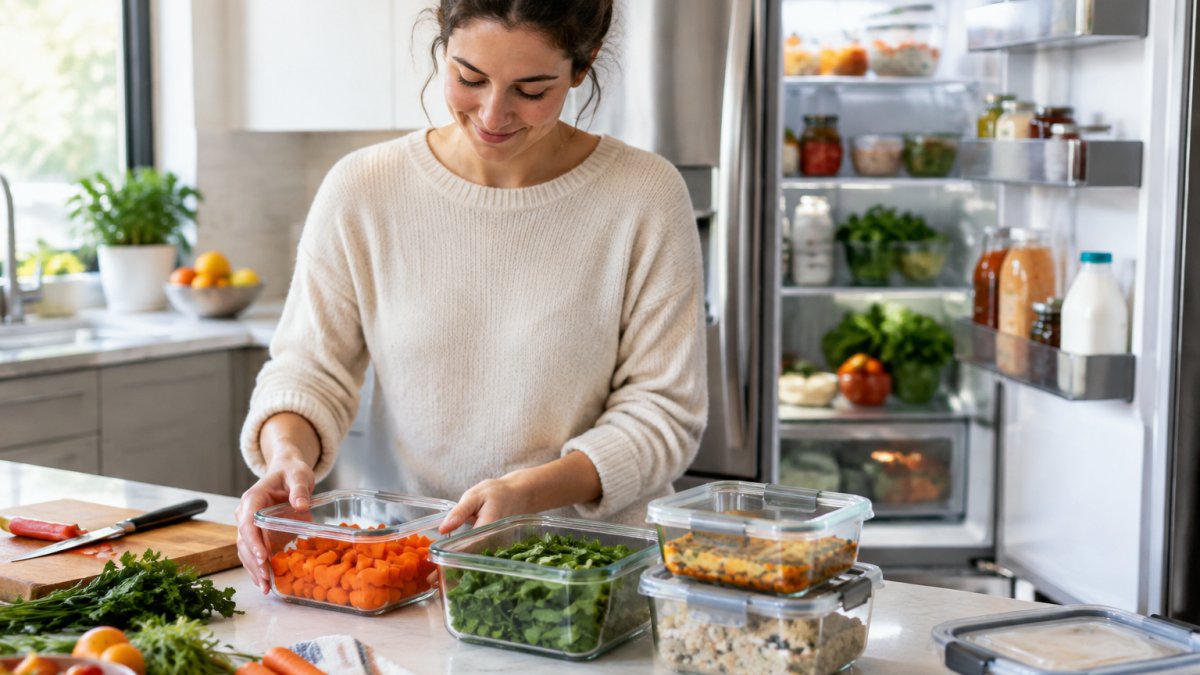
- Cooked leftovers: refrigerate within 2 hours and use within 3 to 4 days; freeze what you won't finish.
- Bread: room temperature for a few days, then slice and freeze rather than refrigerate.
A few habits make the reference stick:
- Store fruits and vegetables separately, since some fruits release ethylene that speeds ripening in nearby produce
- Freeze food before it turns, not after
- Label containers with the date and use clear containers
- Keep a designated "use-first" shelf at eye level
The woman is American.
Avoid storing milk or raw meat in the refrigerator door.
For deeper techniques, read our guide on 8 ways to store organic vegetables longer.
Match each food category to the right zone and a typical shelf life.
| Food | Where to store | Typical shelf life |
|---|---|---|
| Leafy greens and herbs | Crisper drawer, wrapped in a dry towel | 3 to 7 days |
| Berries | Dry and unwashed in a breathable container | Roughly 3 to 7 days |
| Root vegetables | Cool and dark, separate from onions | 2 to 4 weeks |
| Dairy | Interior shelf, not the door | Use within the date once opened |
| Raw meat and poultry | Bottom shelf in a sealed container | Cook or freeze within 1 to 2 days |
| Cooked leftovers | Refrigerate within 2 hours | Use within 3 to 4 days |
| Bread | Room temperature, then slice and freeze | A few days |
How to Use Leftovers Before They Go Bad
Leftovers are where most households lose money. The fix is a repeatable system that moves food in order of urgency.
Step 1: Sort by urgency. Once a week, pull everything from the refrigerator and rank it into three groups: eat today, eat within two days, and freeze now. Put the "eat today" group on a designated use-first shelf at eye level.
Step 2: Read the date label correctly. Date labels are mostly about quality, not safety, and most dates are set by the maker. A "best if used by" date is about peak quality; a "use by" date is the maker's estimate of last peak quality. Neither is automatically a safety cutoff. Use your senses alongside the label, and follow the FDA's food waste guidance for storage times.
Step 3: Apply the safety rules. Refrigerate cooked leftovers within 2 hours and use them within 3 to 4 days. If you will not finish something in that window, freeze it in single portions on the day you cook it.
Step 4: Plan a use-it-up night. Build one "clean out the fridge" dinner into each week's menu. Soups, frittatas, stir-fries, grain bowls, and tacos absorb almost anything.
Step 5: Repurpose deliberately. Leftover roast chicken becomes soup stock and tacos; wilting greens go into a frittata; ripe fruit becomes a smoothie or quick bread.
Watch out: the "sniff test" is not reliable for every food, so when in doubt about meat, dairy, or anything left out more than 2 hours, throw it out.
If you want more ideas on sustainable food habits, browse our latest blog.
Try Food Scrap Composting at Home
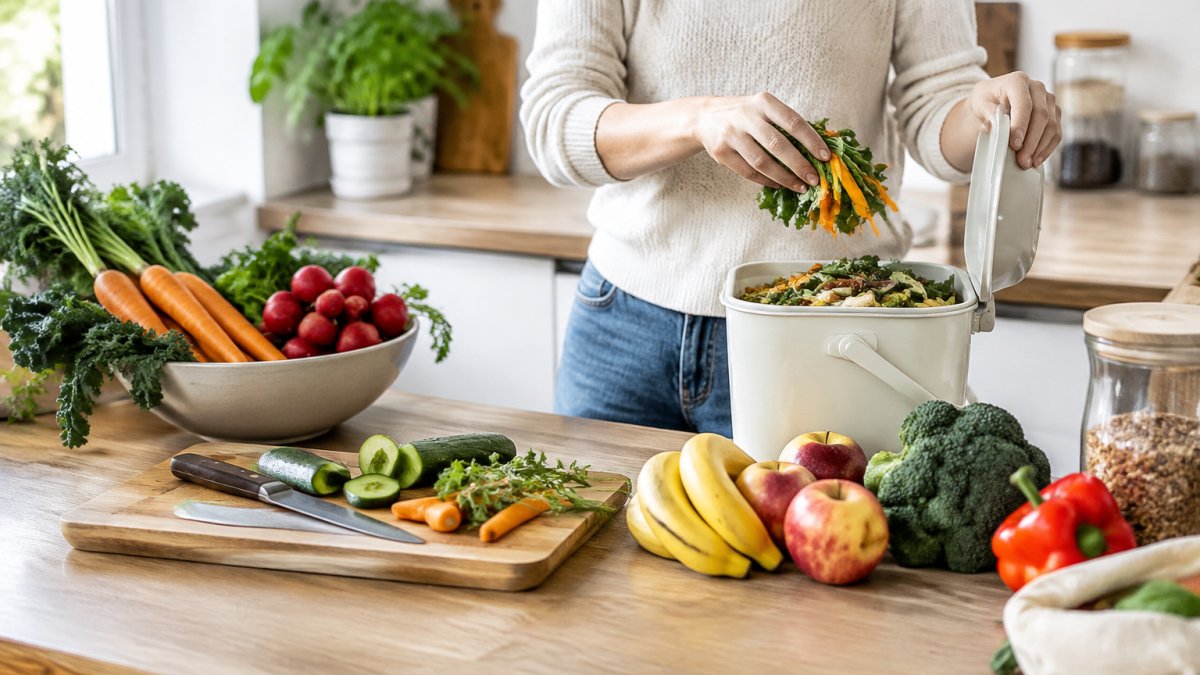
Food scraps composting turns peels, cores, and coffee grounds into free soil for your garden, and cuts the volume of household food waste going to landfill.
Start simple:
- Keep a small covered bin on the counter
- Add fruit and vegetable scraps, coffee grounds, and eggshells
- Skip meat, dairy, and oily foods
- Balance greens with dry leaves or shredded paper
- Turn the pile weekly
Edible peels and ugly produce can often be used instead of tossed, so sort before you compost.
If you want more ideas on sustainable food habits, browse our latest blog.
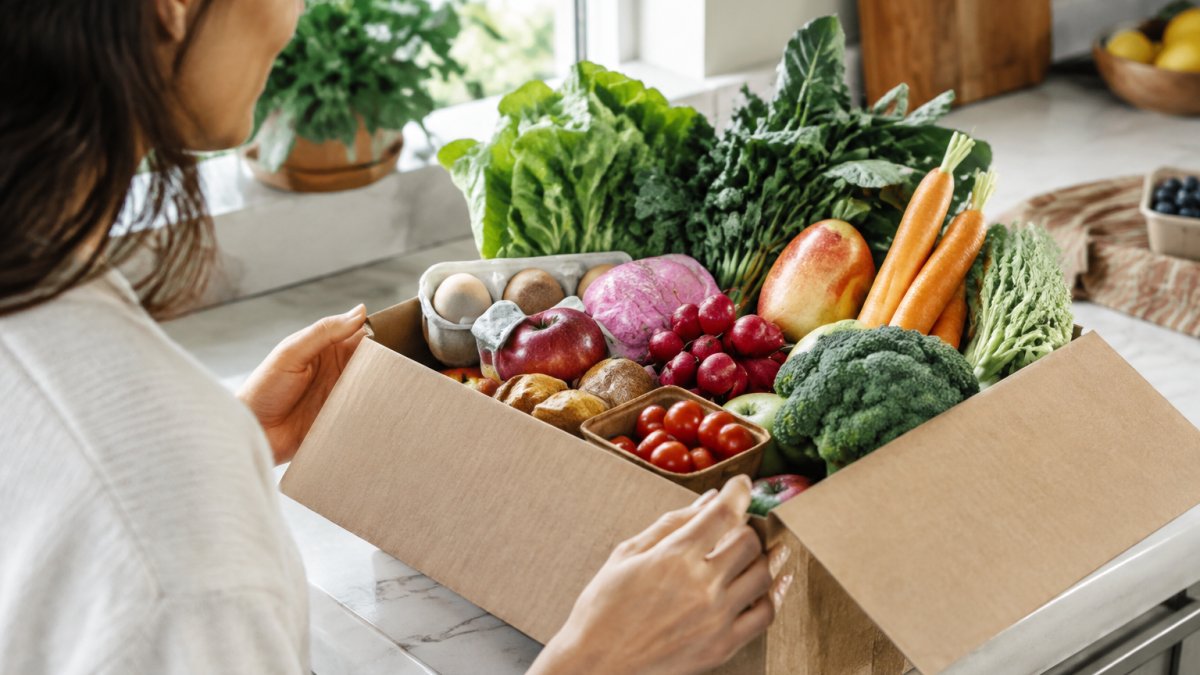
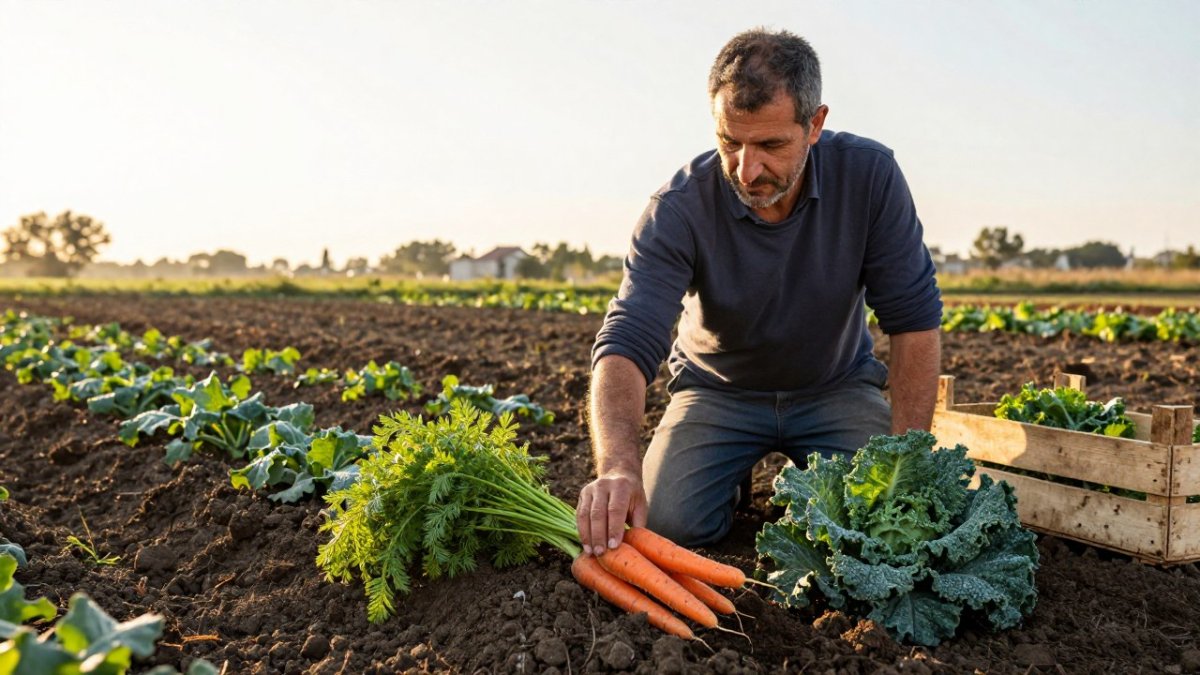
Reducing household food waste comes down to a system: plan, store well, use leftovers, and compost the rest. At Papadaves, we make that easier with organic products sourced from our own organic farm and delivered farm-to-door, so your food arrives fresh and stays that way. Start with a weekly plan, then let our farm-to-door delivery keep your kitchen stocked with wholesome, high-quality goods.
Frequently Asked Questions
What are some simple ways to reduce food waste at home?
Start with a weekly meal plan and a shopping list built from what is already in your refrigerator, freezer, and pantry. Buy only what you need, store produce properly, and set aside one night to use leftovers. Planning, prepping, and storing food properly can help households waste less.
How can meal planning help reduce food waste?
Meal planning tells you exactly what to buy and when you will cook it, so fewer ingredients sit forgotten at the back of the fridge. Check your kitchen inventory first, plan meals around food that needs using, and write a shopping list you stick to.
What can I do with food scraps at home?
Composting keeps food scraps out of the trash and turns them into soil for your garden. Collect fruit and vegetable peels, coffee grounds, and eggshells in a sealed countertop container, then add them to an outdoor bin or tumbler with dry leaves or shredded paper. Avoid meat, dairy, and oily foods in a home bin to limit odors and pests.