 how-to
How to Find Local Organic Farms Near You
Last Updated: November 4, 2026
Quick Summary
To find local organic farms, start with directories such as the USDA Local Dashboard, which lets you pick a state and county, and the Rodale Institute search tool, which lets you enter a zip code. Confirm any farm's certification in the USDA Organic Integrity Database before you buy.
- Use the USDA Local Dashboard by picking a state and county.
- Enter your zip code in the Rodale Institute search tool to find certified operations.
- A directory listing is not proof of certification, so check the USDA Organic Integrity Database.
- Ask the farm directly for its certificate if you can't confirm status online.
- Join a CSA program to receive seasonal produce weekly, and sign up early since popular farms fill fast.
Table of Contents
- Start Your Search with Local Food Finder Tools
- Confirm a Farm's USDA Organic Certification
- Join a CSA Program to Get Seasonal Produce Weekly
- Frequently Asked Questions
Start Your Search with Local Food Finder Tools
The USDA's Local Dashboard lets you pick a state and county to see local agriculture data and farming news. USDA Farmers.gov Local Dashboard
Rodale Institute runs a searchable map of certified organic operations nationwide, enter your zip code and browse. Rodale Institute Organic Farm Search Tool Try a few tools side by side, since no single directory catches every farm.
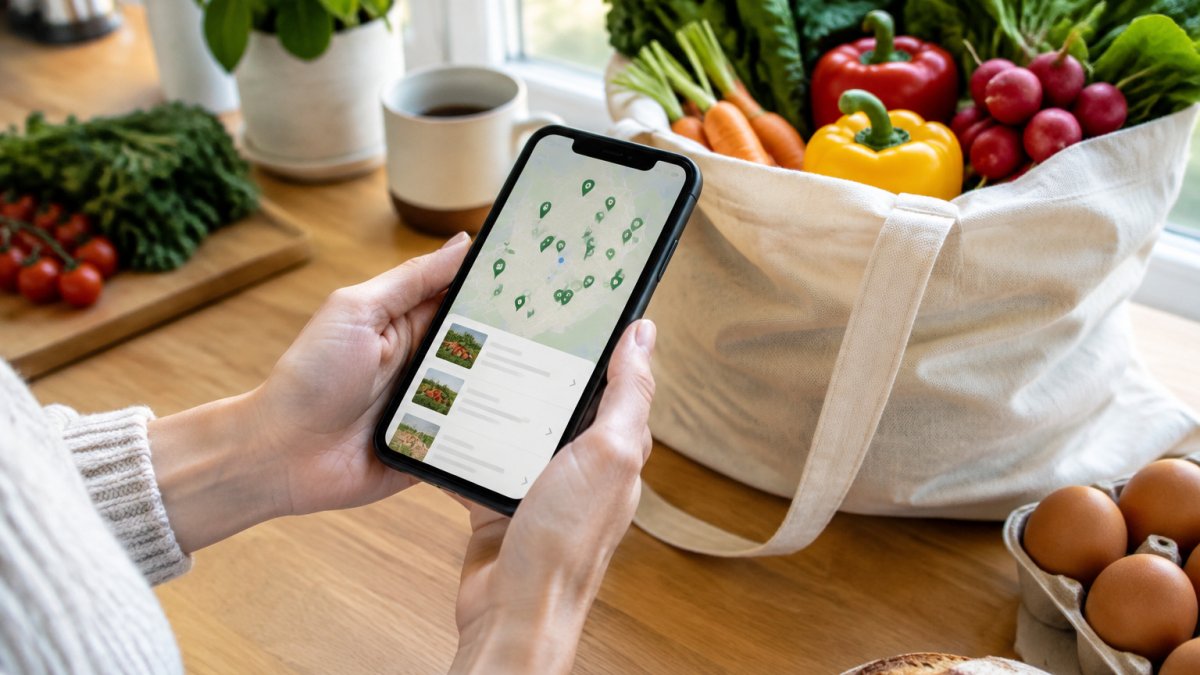
Two directories cover most options, and each has a different strength.
| Tool | Coverage | How to use it |
|---|---|---|
| USDA Local Dashboard | State and county data | Pick a state and county |
| Rodale Institute search | Certified organic operations nationwide | Enter your zip code |
Confirm a Farm's USDA Organic Certification
A directory listing is not proof of certification, check before you buy via the USDA Organic Integrity Database. USDA Organic Integrity Database Look for an active certification status and a certificate the farm can show on request; if you can't confirm online, ask directly, a certified farm will answer without hesitation.
Join a CSA Program to Get Seasonal Produce Weekly
A CSA (Community Supported Agriculture) program lets you buy a share of a local farm's harvest, usually arriving weekly during the growing season. USDA guidance on CSA programs Search for CSA farms near you, compare share sizes, pickup locations and season length, sign up early since popular farms fill fast, and plan meals around what the farm sends each week.
Papadaves offers farm-to-door organic delivery from its own organic farm, so you can also explore home delivery as an option. anchor words
Frequently Asked Questions
How can I verify if a local farm is certified organic?
Look up the farm in the USDA Organic Integrity Database, which lists certified operations and their certification status. Certified farms display the USDA organic seal on products they sell with certification. Some small farms that sell directly may be exempt from certification, but they cannot label products as certified organic. Ask the farmer directly which practices they follow and whether they hold certification.
How do I join a CSA program near me?
Search for CSA farms in your area through a local food finder tool or by contacting farms directly. Most CSAs require you to sign up for a share before the growing season starts, and payment often comes upfront. Ask what is included, how pickup works, and whether the farm offers flexible share sizes. Pricing depends on share size, season length, and pickup location, so check each farm's website or contact them for current rates.
Is there an app for finding local farm stands?
Yes. Several food finder tools and online directories list farm stands, farmers markets, and direct-to-consumer farms by zip code. Use the search filter for organic when available, and check each listing's hours and product list before you visit. Listings can change with the season, so confirm details by phone or on the farm's website.