 Ultimate guide
How to Choose Organic Vegetable Delivery Service
Quick Summary
To choose an organic vegetable delivery service, compare the model (farm-direct, aggregator or box), confirm USDA organic certification, and size the box to your household. Then check the subscription terms, substitution rules and refund policy, and work out your real per-pound cost.
- Farm-direct services offer the most traceability, because you know exactly which operation grew your food.
- Check that the USDA certification covers the facility that packs your box, and ask for the certification number.
- Estimate weekly vegetable use before choosing a box size, since oversized boxes can spoil before you eat them.
- Confirm whether a pause keeps your delivery slot or skips it, and find the cutoff deadline for skips and cancellations.
- Calculate your effective per-pound cost, including delivery fees and waste, rather than comparing headline box prices.
Table of Contents
- What Organic Vegetable Delivery Actually Covers
- Organic Vegetable Delivery Options: Farm-Direct, Aggregator and Box Services
- How to Verify Organic Claims and Certification
- Box Size, Household Fit and Customization
- How Organic Vegetable Box Subscriptions and Delivery Schedules Work
- Full Cost Comparison: What You Actually Pay
- Freshness, Storage and Making a Box Last
- Substitutions, Skips, Cancellations and Refunds
- Reading Organic Produce Delivery Reviews With a Critical Eye
- Finding Organic Produce Delivery Near Me and Checking Your Area
- Frequently Asked Questions
What Organic Vegetable Delivery Actually Covers
Last Updated: November 19, 2026
Choosing an organic vegetable delivery service starts with knowing what you are actually paying for. Organic produce delivery brings fresh, certified-organic vegetables and fruit to your door, usually in a recurring box or as one-time orders. For many households, that convenience is the main draw, but the service you pick determines how much control you have over what arrives.
Papadaves brings organic produce directly from our own organic farm to your table, with farm-to-door delivery as the core of the experience. Single-source models like ours differ from services that pull produce from many growers, so it helps to understand the tradeoffs before you sign up.
Organic produce delivery covers more than the vegetables in the box. You are typically buying three things: the produce itself, the packaging and logistics that get it to you while it is still fresh, and the service terms that govern changes, pauses and refunds. Each of these affects your real cost and your experience.
More buyers means more services competing on quality, convenience and price, which is why the details matter.
Organic Vegetable Delivery Options: Farm-Direct, Aggregator and Box Services
Most organic vegetable delivery services fall into three broad models. Farm-direct services, like ours, grow or source produce from a single operation. Aggregators collect produce from many farms and deliver it under one brand. Box services sell curated weekly assortments, often with limited customization.
Each model suits a different buyer. Farm-direct delivery tends to offer the most transparency about where food comes from. Aggregators usually offer a wider variety of items. Box services are the simplest to start but can be the least flexible when your family has specific preferences.
For buyers who value traceability, a farm-direct service is a strong fit, because you know exactly which operation grew your food. If you need a wider mix of items, an aggregator may fit better. Box services work well for households that want a surprise each week and do not mind receiving whatever is in season.
How to Verify Organic Claims and Certification
"Organic" is a legal term in the United States, not just a marketing word. Produce labeled organic should be certified under the USDA National Organic Program, which sets the standards for growing, handling and labeling. Ask any delivery service whether its products are certified, and check that the certificate covers the farm or facility that actually packs your box. Five steps to verify organic food labels show how to confirm these claims yourself.
Organic certification tells you how food was grown, not that it is automatically safer or more nutritious. Keep that distinction in mind when a service leans heavily on health language.
Practical steps to verify claims:
- Ask for the certification number and check it against USDA organic records.
- Confirm the certified operation matches the name on the packaging.
- Read how the service handles produce that comes from outside its own farm, if it sources any.
Box Size, Household Fit and Customization
Box size is the first decision that affects value. A box sized for two adults will be wasteful for a family of five, and an oversized box for one person can spoil before you eat it. Estimate your weekly vegetable use before choosing a size, then add a margin for the items you know you will want. Step-by-step guidance on tailoring box contents to your household walks through the sizing decision in detail.
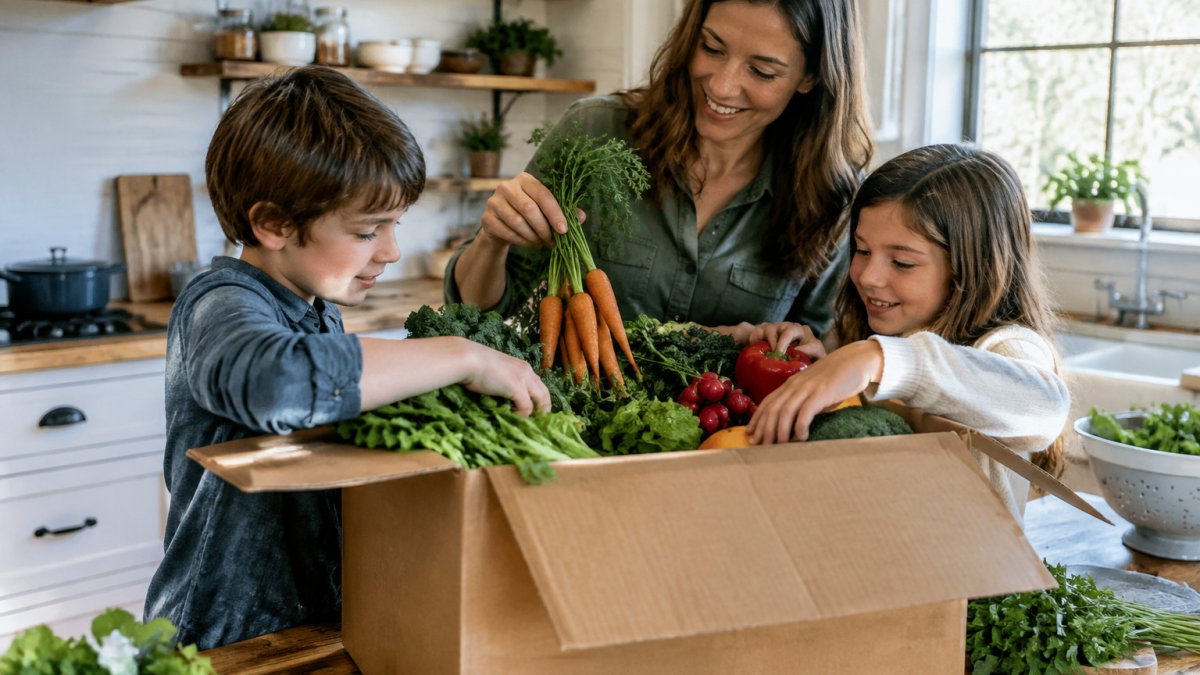
Customization varies widely. Some services let you swap individual items; others deliver a fixed assortment. If your household has allergies, dietary restrictions or strong dislikes, check whether you can exclude items before you commit. Papadaves offers a curated selection from our farm, so ask directly what can be adjusted for your family's needs.
The right box size and customization depend on how your household uses produce, so compare these points before you commit.
| Factor | What to check | Why it matters |
|---|---|---|
| Box size | Estimate weekly vegetable use | Oversized boxes can spoil before eating |
| Customization | Can you swap or exclude items? | Allergies and dislikes need exclusion |
| Fit for household | Size for your household, plus a margin | Avoids waste and running short |
How Organic Vegetable Box Subscriptions and Delivery Schedules Work
A subscription is a set of recurring terms, not a single purchase, so the schedule and the change rules matter as much as the produce. Most services run weekly or biweekly, but the operational details vary enough that they should drive your choice.
Map the cycle before you sign up. Ask four questions and get the answers in writing:
- When is the cutoff to edit, skip, or cancel an upcoming delivery? Cutoff timing varies, so check the exact deadline with Papadaves before your delivery date. Learn whether you can pause organic delivery subscriptions when your schedule gets busy.
- When is my card charged, at order, at cutoff, or at shipment? Billing timing determines whether a last-minute skip actually saves you money.
- What is my fixed delivery day and window, and can I change it? A fixed day is fine until it collides with a work schedule or a weekly commitment.
- What happens if I am not home? Confirm whether the box is left unattended, requires a signature, or needs a cooler or concierge to accept it.
Then look at how the service handles change requests. The best-run subscriptions let you skip, pause, or cancel from an account dashboard with a clear confirmation. Weaker ones require an email or phone call, which is a signal that changes will be slow and easy to miss.
Watch out: a "pause" is not always the same as a "skip." Some services pause billing but keep your delivery slot, while others skip the delivery entirely. Confirm which one you are getting, and confirm whether pausing affects your place in a delivery queue.
Substitutions deserve their own check. When an item is out of season or short, services typically do one of three things: send a comparable replacement automatically, let you set a preference or opt out of substitutions, or credit your account. Ask which applies and whether you can flag disliked items so they are never substituted in.
Finally, confirm the exit terms. Find out the notice required to cancel, whether any cancellation fee applies, and how refunds work for a missed, damaged, or incomplete delivery. A service that states these terms plainly before your first order is usually the one that handles problems well after it.
Full Cost Comparison: What You Actually Pay
Sticker price is the least useful number on an organic vegetable delivery page. The figure that matters is your effective cost per serving or per pound after delivery fees, minimum orders, subscription charges, and the produce you end up throwing away. Build that number yourself before you compare two services, because no two boxes are priced the same way. A practical breakdown of whether farm delivery is worth the cost can help you run the comparison.
Start with a simple worksheet. For each candidate service, record:
- The box price for the size you would actually order (not the smallest introductory box).
- The delivery fee per drop, and whether it is waived above a threshold or bundled into the box price.
- Any minimum order, membership fee, or annual subscription charge.
- The stated weight range of the box, so you can convert price to a per-pound figure.
- The cost of add-on items you would realistically buy (eggs, fruit, pantry staples).
Then do the division. Pricing depends on quantity, delivery dates, and location, so request a current quote from Papadaves and then work out your per-pound cost using the box weight and fees they provide. That per-pound figure, not the headline price, is what you compare against the per-pound price of the organic vegetables you currently buy.
Box sizes can change your per-pound cost, so run the math on two sizes before you assume the smaller box is the cheaper choice.
Watch out: introductory discounts and first-box promotions can distort the comparison, so check the regular rate before you decide.
Factor in waste last, because it is the number most buyers forget. If a fixed box sends vegetables your household will not eat, the effective cost of the food you do use climbs well above the per-pound figure. Track one or two boxes before you judge value: note what you used, what you gave away, and what spoiled. A slightly more expensive box with strong customization can beat a cheaper fixed box once waste is counted.
Finally, compare the total against your current grocery spend on the same items, then subtract the value of your time and the trips you no longer make. That net figure, not the box price, is the honest basis for choosing between services.
Freshness, Storage and Making a Box Last
Freshness depends on how the produce was harvested, packed and shipped. Ask how quickly orders are packed after harvest and how they are kept cold in transit. Once the box arrives, refrigerate leafy greens and most vegetables promptly, and store items like tomatoes and basil according to their needs.
Plan your meals around the most perishable items first, then use sturdier produce later in the week. Roots, squash and cabbage typically keep longer than leafy greens, so they make good end-of-week ingredients.
Substitutions, Skips, Cancellations and Refunds
Ask every service how substitutions are handled when an item is out of season or unavailable. Some services let you refuse substitutes; others send a replacement automatically. Find out the deadline for skipping a delivery, how to cancel, and whether any refund applies to a bad or damaged delivery.
A clear refund policy is one of the best signals of how a service treats customers when something goes wrong. Get the terms in writing before your first order.
Reading Organic Produce Delivery Reviews With a Critical Eye
Reviews can help, but they vary in quality. Look for reviews that describe specific experiences: how produce looked on arrival, how long it lasted, and how the company handled a problem. Be wary of reviews that only praise or only complain without detail, and note whether reviewers are describing the same service model you are considering.
Compare patterns across many reviews rather than reacting to a single outlier.
Finding Organic Produce Delivery Near Me and Checking Your Area
Search results for "organic produce delivery near me" depend on where you live, so the first step is confirming whether a service delivers to your address at all. Check the delivery area on the service's site before comparing anything else.
For Papadaves, delivery is farm-to-door, so confirm your ZIP code is covered and ask about delivery days for your area. If your area is outside coverage, a local farm pickup or a different model may be a better fit.
Visit Papadaves's website to check your delivery area and request current pricing, and explore our shop organic produce to see what is available.
Frequently Asked Questions
What is the best vegetable delivery service?
No single service is best for everyone. The right choice depends on your delivery area, whether you need to customize items, how often you want deliveries, and what you are willing to pay. Start by listing your non-negotiables, such as organic certification, skip or pause options, and whether you need allergy-safe or specific-diet items. Then compare two or three services against that list. Papadaves sources its products from its own organic farm, so check its website for current availability and delivery areas before deciding.
How can I tell whether vegetables are certified organic?
In the United States, products labeled organic must meet USDA National Organic Program standards. Look for the USDA Organic seal on packaging or ask the provider for its certification details. A service should be able to tell you whether it is certified and by which certifier. Certification is a verifiable claim, so treat vague wording such as natural or farm-fresh without a certificate as unconfirmed. Ask for documentation if the claim matters to your family.
How often should I schedule organic vegetable delivery?
Most households do best with a weekly or biweekly schedule, depending on how many people you feed and how quickly your family uses produce. Leafy greens and berries usually need to be used within a few days, while root vegetables keep longer. Start with a less frequent schedule if you are unsure, and adjust after two or three deliveries. Choose a service that lets you change frequency without penalty so you can adapt as your needs change.
Is it really worth buying organic vegetables?
The answer depends on your priorities. Many buyers choose organic to limit synthetic pesticide residues and support farming practices they trust, while others find conventional produce meets their needs. Research on nutritional differences is mixed, so it is worth evaluating claims rather than assuming organic is automatically safer or more nutritious.
How do I compare organic produce delivery services?
Compare services on the same criteria: certification, delivery area, box size options, customization, skip and cancellation policies, freshness guarantees, and total cost per week. Write down the cost of your current weekly organic purchases so you can compare fairly. Read recent reviews, but weigh consistency over single experiences. Pricing depends on quantity, delivery dates, and location, so request current pricing from each provider rather than relying on outdated figures.