 How-to
How to Verify Organic Food Labels in 5 Steps
Quick Summary
To verify organic food labels, look for the USDA Organic seal, which means the product met national standards and was reviewed by a USDA-accredited certifying agent. Then note the company name or certification number and search the USDA Organic Integrity Database to confirm the operation's certificate is active.
- A green leaf or the word natural does not guarantee federal organic rules were met.
- Check the package for the USDA Organic seal, a clear organic claim, and a certifier's name or number.
- Search the USDA Organic Integrity Database by operation name or certificate number.
- Confirm the certificate status is active and that its scope covers the specific product.
- If you cannot confirm the certifier or operation, treat the organic claim as unverified.
Table of Contents
- What the USDA Organic Label Requires Before a Product Can Use It
- Step-by-Step: Checking Any Operation in the Organic Integrity Database
- Confirming a USDA Organic Certifier and Certified Companies, Then Choosing Your Next Purchase
- Frequently Asked Questions
What the USDA Organic Label Requires Before a Product Can Use It
Last Updated: November 8, 2026
Organic food labels can confuse shoppers: a green leaf or the word "natural" doesn't always mean federal organic rules were met. Before a product can carry the USDA Organic seal, it must meet national standards and be reviewed by a USDA-accredited certifying agent.
What to look for on the package:
- The USDA Organic seal
- A claim such as "100% organic," "organic," or "made with organic ingredients"
- A certifier's name or certification number
- An ingredient list marking organic items clearly
The USDA's Agricultural Marketing Service explains that organic labels are reviewed and approved before marketplace use. For the full certification process, see the step-by-step guide to verifying organic food certification. You can read the full rules on the USDA Agricultural Marketing Service organic labeling rules.
Step-by-Step: Checking Any Operation in the Organic Integrity Database
Once you know what the label should show, you can check the claim yourself: start with the company or farm name on the package, then search the USDA Organic Integrity Database for a current organic certificate.
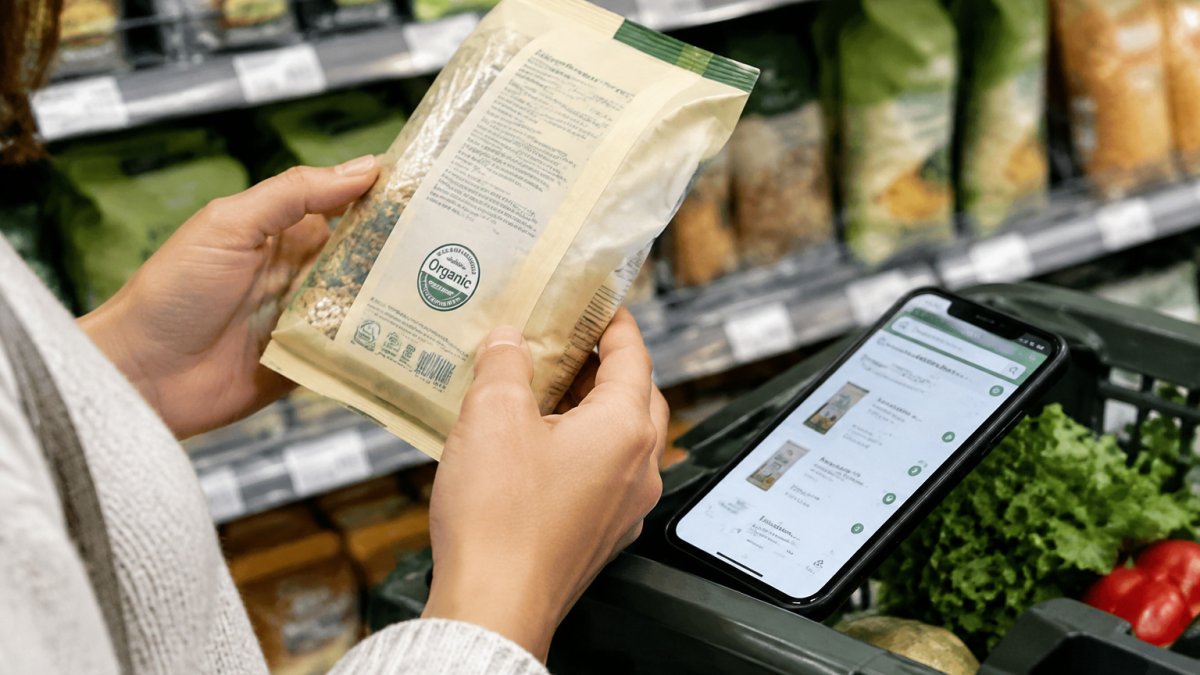
!Shopper reading an organic label in a grocery aisle
How to run a quick check:
- Note the company name and any certification number.
- Search the USDA Organic Integrity Database by operation name or certificate number.
- Confirm the status is active and the scope covers the product.
If the operation doesn't appear, don't assume the product is fake, some are imported or certified under another system. Still, an unverified claim deserves scrutiny.
Here is a quick summary of the three checks to run on any organic claim.
| Step | What to do | Time or frequency |
|---|---|---|
| Note company name | Read the name and any certification number on the package | Before shopping |
| Search the database | Look up the operation in the USDA Organic Integrity Database | Quick check |
| Confirm status | Check that status is active and scope covers the product | Each product |
Confirming a USDA Organic Certifier and Certified Companies, Then Choosing Your Next Purchase
Next, confirm the certifying agent behind the label. Every certified operation works with an accredited certifier, and that name should be easy to find. If you can't confirm the certifier or operation, treat the claim as unverified.
Once you have checked the label, you can decide where to buy. Papadaves brings the goodness of nature directly to your table, offering a curated selection of organic products sourced from its own organic farm and delivered to your door. To see how that works, explore farm-to-door organic delivery.
Families wanting a steady supply of organic produce can review organic produce delivery options for families. Whichever route you choose, keep the five checks in mind: read the seal, match the claim, find the certifier, search the database, and confirm the scope.
Frequently Asked Questions
How do you know if organic food is really organic?
Start with the label. A product sold as USDA organic must carry the USDA Organic seal only if a USDA-accredited certifying agent approved it. Look for the certifier's name or certification number, then search the Organic Integrity Database by company name or certification number. If the operation appears there with an active status covering the product, the claim is verified. If it does not appear, treat the claim as unconfirmed and contact the certifier or the brand before buying.
Does a USDA Organic seal mean every ingredient is organic?
Not always. The seal applies to products labeled "100% organic" or "organic." Products labeled "made with organic ingredients" contain a lower share of organic ingredients and cannot display the seal. Check the official USDA labeling rules for the exact requirements. Check the ingredient list: ingredients marked with an asterisk or the word organic indicate their status. Ingredients listed without that designation are not certified organic.
What is the difference between "organic" and "made with organic" on a food label?
The difference is the percentage of certified organic ingredients. "100% organic" means all ingredients are organic. "Organic" means most ingredients are certified organic. "Made with organic ingredients" means a smaller share is organic, and the seal cannot appear on the package. Each category has different labeling rules, so the wording on the front of the package tells you how much of the product is certified organic.